


Sodium Saccharin in Toothpaste: Why a Paste With No Baking Soda Tastes Like Soda to Some People and Not to Others
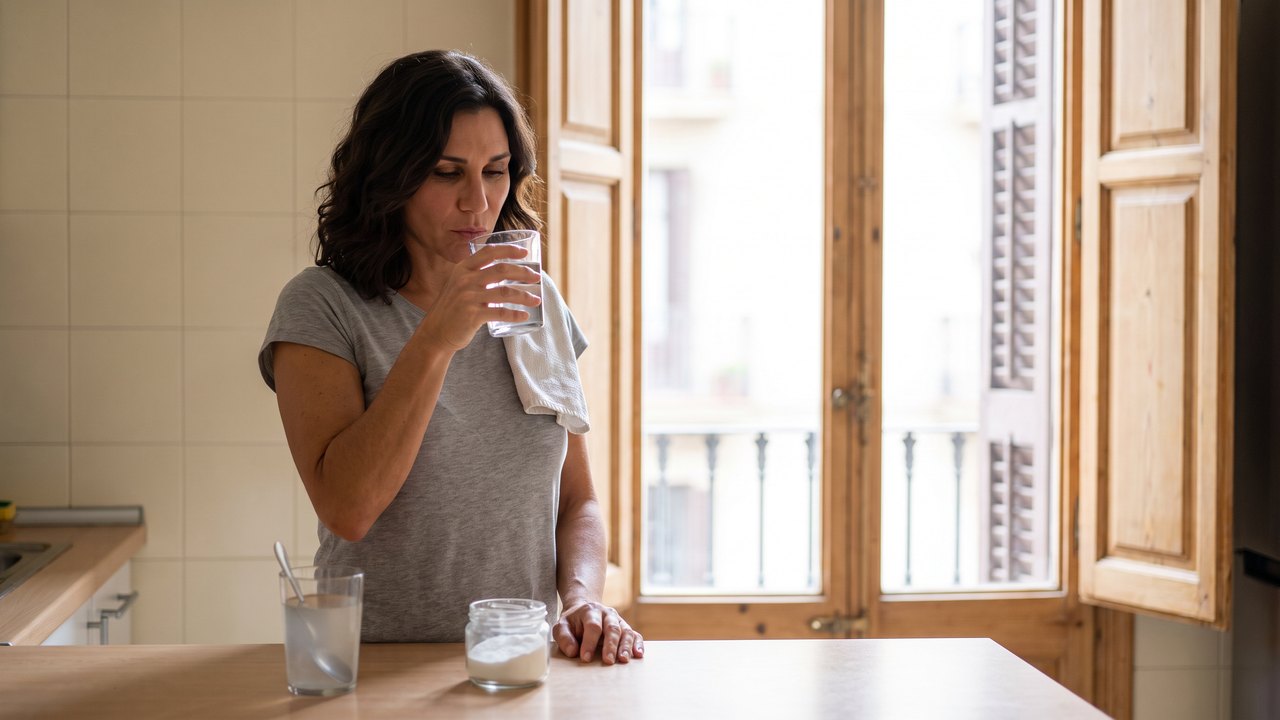
Two shoppers wrote the same complaint this October about two of our toothpastes: it tastes of soda. Not fizzy soda. Baking soda, that flat, salty, faintly soapy taste of a glass of water with a spoon of bicarbonate stirred in. Here is the odd part. Neither tube contains baking soda. We checked the ingredient lists line by line. So the question is fair, and the answer is more interesting than a mistake on a label: one of the most common ingredients in toothpaste tastes different in different mouths, and the reason is written in your genes.
Start with sodium saccharin in toothpaste. It is there to make the paste sweet without sugar, which matters, because sugar feeds the bacteria that make acid. And it has always had a second face.
A sweet crust in 1878
In 1878 a chemist named Constantin Fahlberg was working in the laboratory of Ira Remsen at Johns Hopkins University. He spilled an experimental compound over his hands, forgot about it, and that evening picked up a roll and bit into a remarkably sweet crust. He ran back to the lab and tasted everything on his bench until he found the source. In February 1879 the two men described the substance in print as even sweeter than cane sugar. It was saccharin, and for more than a century the people who used it also noticed something else: a bitter, metallic shadow that arrives after the sweetness.
Why sodium saccharin in toothpaste tastes bitter to some people
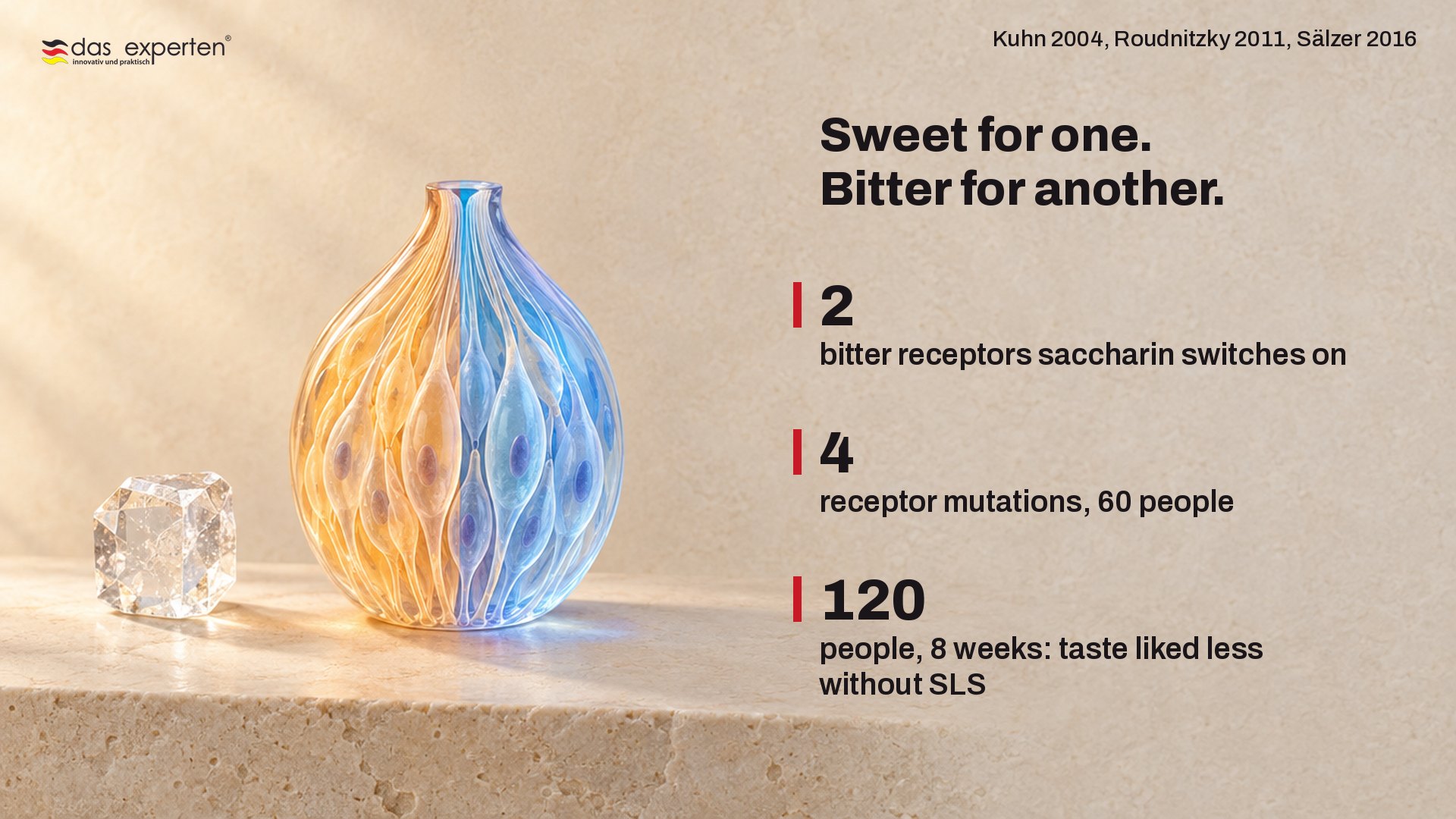
In 2004 a team at the German Institute of Human Nutrition in Potsdam found the reason. Saccharin does not only switch on the sweet receptor. At the concentrations people describe as bitter, it also activates 2 human bitter taste receptors, TAS2R43 and TAS2R31 (in 2004 still called TAS2R44), and both sit in the taste buds of the tongue. One molecule, two signals. Which one wins depends on the tongue.
Tongues differ more than we assume. Humans carry about 25 genes for bitter taste, and they vary from person to person. In 2011 researchers sequenced this gene region in 60 people and tested how bitter they found saccharin. They found 4 mutations in one of those two receptors, TAS2R31, that each changed how strongly it responds. Put simply, two people can brush with the same paste from the same tube, and one tastes sweet mint while the other tastes something bitter and flat that the mouth files under the nearest familiar word. For many people that word is soda. That last step is our inference, not a finding of the study, but it fits the complaint exactly.
The salt that does not say salt
Sweeteners are not the only taste in the tube. Many pastes carry sodium salts with a job to do. Sodium pyrophosphate, for example, is added against tartar because it slows the growth of calcium phosphate crystals on teeth. Flavour chemists know these salts are not neutral: a 2009 patent from a large flavour house lists poly and pyrophosphates, together with zinc salts and bicarbonate, among the ingredients that leave bitter or metallic impressions it sets out to mask, and notes that alkaline pastes are hard to flavour at all. Salt itself is a separate channel. In mice, sodium is sensed by its own dedicated taste cells, a finding published in Nature in 2010. Bitter, salty and alkaline arriving together is close to what most of us remember as baking soda.
Why a paste without SLS tastes different
There is one more reason a new paste can taste strange, and it is something missing rather than something added. Most mass market pastes foam with sodium lauryl sulfate, SLS. In a German and Dutch trial, 120 young adults with inflamed gums brushed for 8 weeks with a paste with or without SLS. Gum bleeding and plaque improved the same in both groups. But when asked about taste, freshness and foam, people scored the SLS paste higher. A thick foam and a sharp mint are what many of us have learned to call the taste of toothpaste. Take them away, and the other notes in the tube come forward.
Salty taste in mouth: when it is not the toothpaste
A taste from toothpaste fades within minutes after you spit. If a salty, bitter or metallic taste stays for hours, comes back on days you do not brush, or arrives with a dry mouth, swelling or pain, the paste is not the cause. Medicines, a dry mouth and infections can all change taste. That is a question for a dentist or a doctor, not for the label.
What to do if your toothpaste tastes like soda
Turn the tube over and read the ingredients. If you find sodium saccharin, you now know which molecule you may be tasting and that your genes, not the paste, decide how bitter it is. If you also find a pyrophosphate, that is the salt. Give a new paste a week, because a mouth used to foam and strong mint needs time to stop expecting them. If the taste still bothers you, choose another flavour with a different sweetener. Taste is personal, and a paste you dislike is a paste you stop using.
Here is exactly what is in our two tubes from those reviews. DETOX lists sodium pyrophosphate and sodium saccharin. SYMBIOS lists sodium saccharin and no pyrophosphate. Neither contains sodium bicarbonate, and both foam with sodium lauroyl sarcosinate instead of SLS, so they foam less than many people expect. That is a description of the label, not a promise about how either will taste to you.
The same molecule can taste like candy to one person and like soda to another. When a toothpaste tastes wrong, the first suspect is the sweetener, the second is the salt, and the last is the tube.