


Dental Anxiety in Numbers: 15 in 100 Adults Are Afraid of the Dentist, and the Fear Feeds Itself
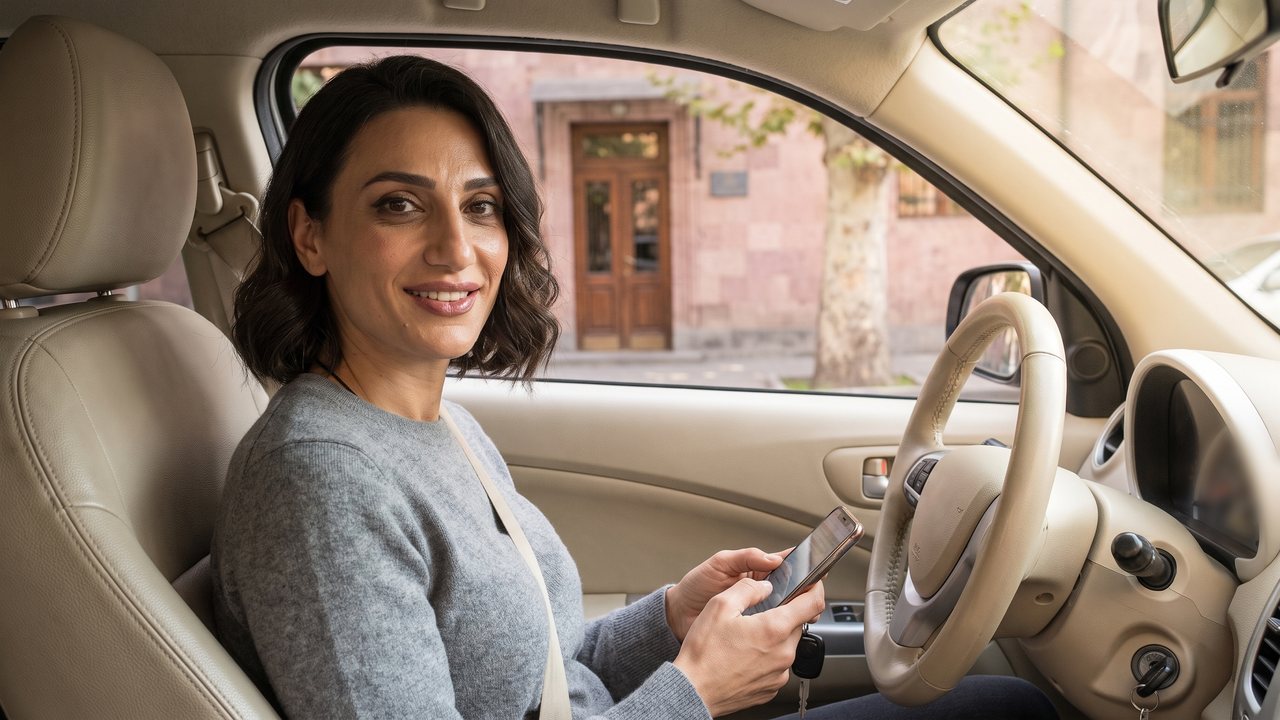
You booked the check up in spring. You moved it once because of work, and once because of nothing in particular. Now you are sitting in the car outside the clinic ten minutes early, and a quiet voice suggests that the tooth does not really hurt that much. If this sounds familiar, you are not unusual, you are a statistic. Dental anxiety is one of the most common fears in medicine, and it has a strange property: the more you obey it, the stronger it gets.
Here is the fear in numbers, from the largest studies we could open, and what those numbers say about the way out.
How common is dental anxiety in adults?
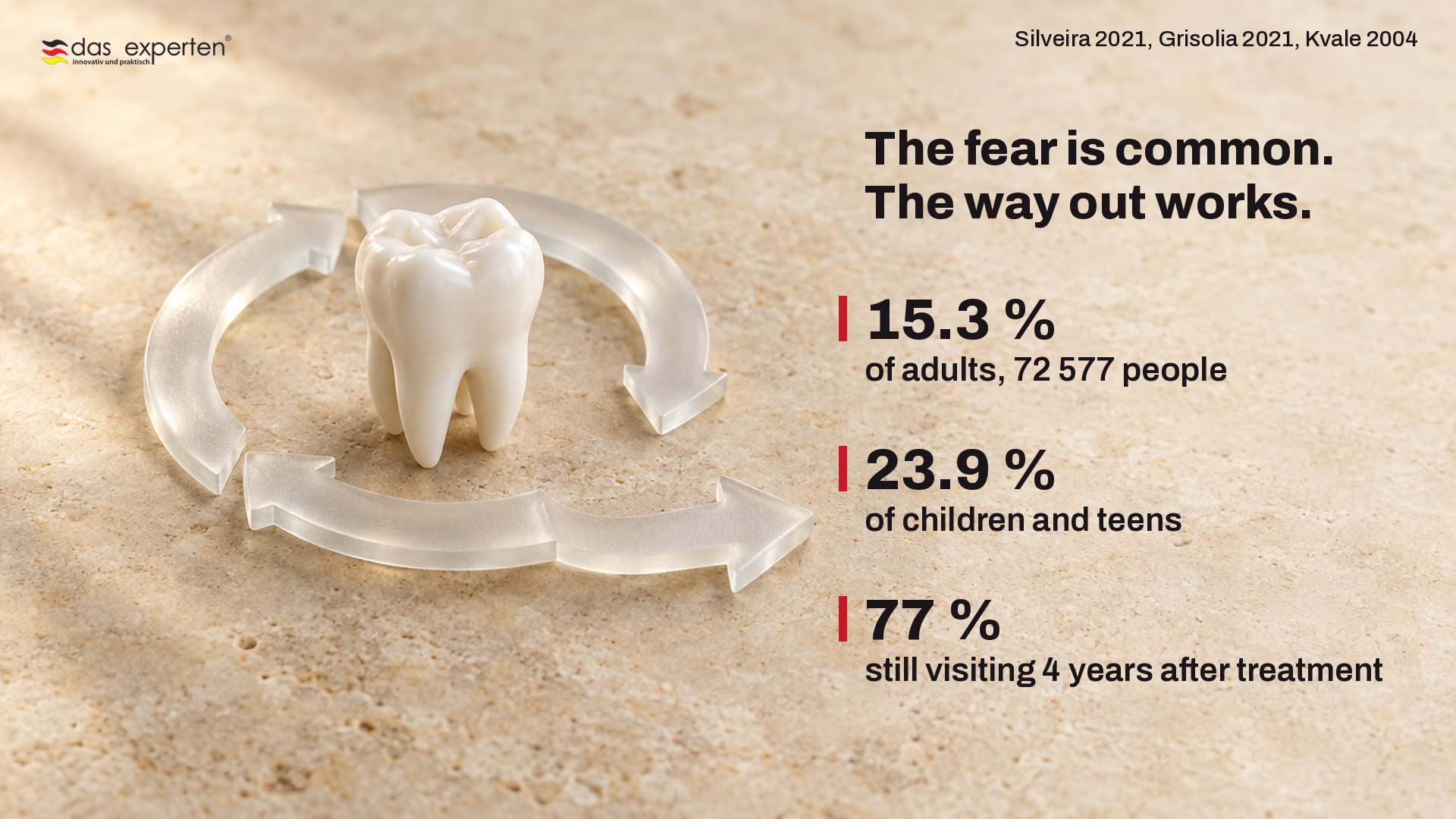
In 2021 researchers in Pelotas, Brazil, pooled every population study of dental fear in adults they could find: 31 publications and 72 577 people aged 18 and over. 15.3 % had dental fear and anxiety. 12.4 % had high fear, and 3.3 % had severe fear, the kind that keeps a person out of the chair for years. Women and younger adults were more often afraid. The authors add a caution worth keeping: the result moved with the questionnaire used, so the honest range around that 15.3 % runs from 10.2 to 21.2 %.
Put plainly: in a waiting room of seven adults, one is probably holding the armrest harder than the others look.
Dental anxiety in children starts early
Children are more afraid, not less. A 2021 review of 50 studies of young people from 3 to 18 found dental anxiety in 23.9 %. The youngest carried the most: 36.5 % of preschoolers, 25.8 % of schoolchildren and 13.3 % of adolescents. In the few studies that looked, anxiety was more common in children who already had cavities. A first visit that starts with pain teaches a lesson that can last decades.
Five questions and a score from 5 to 25
Fear sounds too personal to measure, yet dentists do it in under a minute. The Modified Dental Anxiety Scale asks 5 questions: how you feel about tomorrow's visit, about the waiting room, about the drill, about scaling, about an injection in the gum. Each answer scores from 1 to 5, so the total runs from 5 to 25. In a 2008 survey of 1 000 adults in the United Kingdom, a score of 19 or more marked high anxiety, and 11.6 % crossed that line. Anxiety was four times higher at 18 to 39 than at 60 and over. The young fear more, which is not what most people expect.
You can try it on yourself right now. Answer each of the five questions from 1, not anxious, to 5, extremely anxious, and add them up. A total of 19 or more is the line that survey used for high anxiety. It is a screening number, not a diagnosis, but it is worth saying out loud to your dentist before the visit rather than after it.
Why dental anxiety feeds itself
Avoidance looks like a small, safe choice. Skip one visit, and nothing happens. That is the trap: the cost of a missed check up is invisible, delayed and growing, while the relief of not going is immediate. An Australian team called the result a vicious cycle. Among 6 112 people aged 16 and over, those who were very afraid visited less, waited for pain, felt worse about their teeth and went mostly for emergencies. The whole pattern, delay plus poor oral health plus pain driven visits, appeared in 29.2 % of the very afraid against 11.6 % of people with no fear. Each emergency visit is harder than a check up would have been, and it confirms the fear that caused it.
This is the asymmetry. Going costs a small, known discomfort. Not going costs nothing today and something large and unknown later. Fear is very good at making the first look bigger than the second.
How to get over dental anxiety: what the numbers say
The good news is the strongest number in this article. A meta analysis of 38 studies of behavioural treatment for dental fear found that anxiety fell in 36 of them, with a medium to large effect. More than four years after treatment, an average of 77 % of patients were still visiting the dentist regularly. Fear of the dentist is common, but it is also one of the more treatable fears.
What helps in practice is not courage but control. Tell the dentist at the start that you are anxious; it changes how the visit is run. Agree on a stop signal, a raised hand, and make sure it is honoured. Ask for a short first visit with nothing but a look and a cleaning. Book the morning, so the day does not fill with waiting. If the fear is severe, ask about behavioural treatment for dental fear; sedation is a separate medical decision for your dentist and doctor. And between visits, keep the work small: two minutes of brushing twice a day and floss mean fewer problems to face in the chair.
Fifteen adults in a hundred are afraid of the dentist, and almost one child in four. The fear grows when you stay away and shrinks when you go back on your own terms. The next appointment is the cheapest one you will ever have.