


Mouthwash Before or After Brushing? With Fluoride Toothpaste, Use It Later; the Rest Depends on Two Words on Your Labels
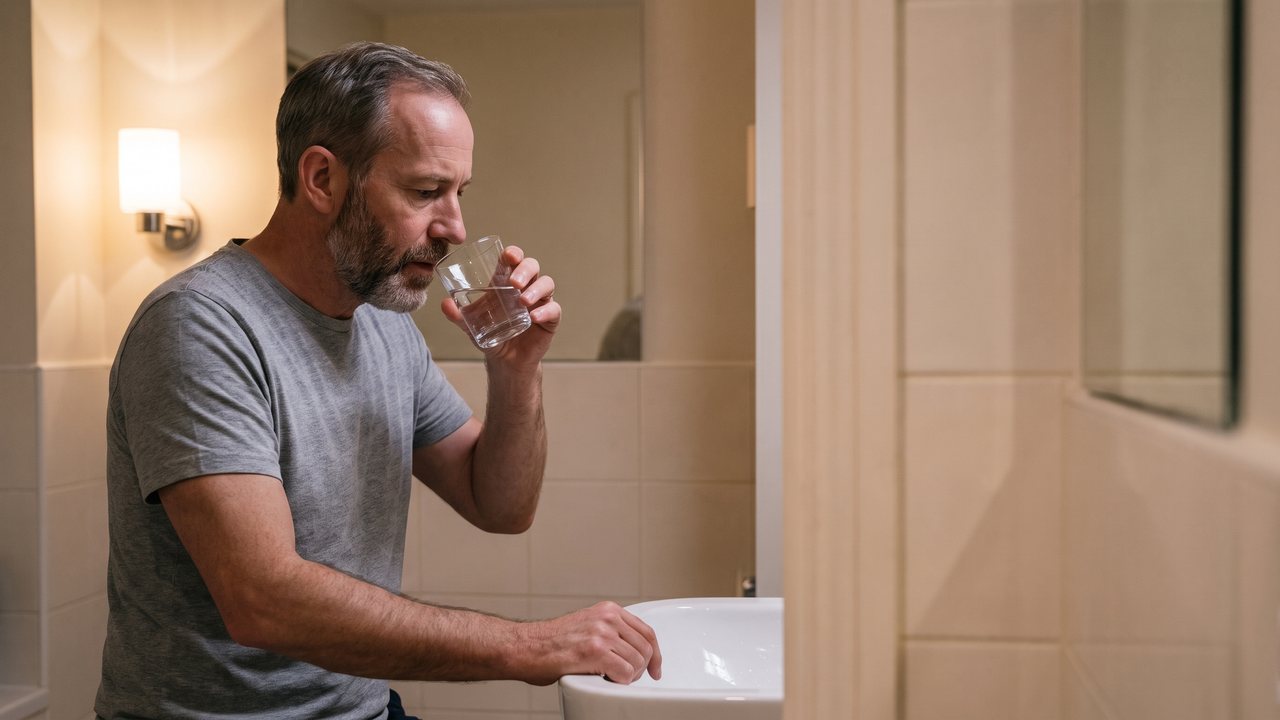
A customer sent us a question that sounds too small for an article. He had bought two of our products, a toothpaste and an enzyme rinse, and wanted to know in which order to use them. The internet answers in one line, and the lines contradict each other: after, to finish the job; before, to loosen the plaque; never straight after. You have probably done all three in the same month without noticing.
Here is the short answer before the long one. If your toothpaste contains fluoride, do not rinse straight after brushing, not with water, not with mouthwash. Spit, and use the mouthwash at another time of day. In a lab test, the lightest rinse left 300% more fluoride in saliva over three hours than the heaviest. Almost everything else said about the order is borrowed from a different chemistry.
Mouthwash before or after brushing: the rule has two parents
The rule is not about mouthwash in general. Its first parent is fluoride. In 1991, eight volunteers brushed with a fluoride toothpaste and then rinsed in eight different ways. The more water, the longer and the more often they rinsed, the less fluoride stayed in their saliva. Over the next three hours, the gentlest rinse, 5 ml for two seconds, once, left an area under the fluoride curve 300% higher than the most thorough one, 20 ml for ten seconds, twice. Fluoride works by staying. A rinse is the opposite of staying.
The second parent is chlorhexidine, the antiseptic in many prescription mouthwashes. It carries a positive charge; sodium lauryl sulfate, the most common foaming agent in toothpaste, carries a negative one, and the two bind. In a 1989 study in Oslo, even a 30 minute gap between a lauryl sulfate rinse and chlorhexidine still blunted the antiseptic's effect on plaque; after 2 hours the interference was gone. That is where «wait thirty minutes» comes from, and, read carefully, the study that produced it says thirty minutes is not quite enough.
Should you rinse after brushing? The evidence is weaker than the rule
Now the part the one line answers leave out. In Kaunas, Lithuania, 407 schoolchildren entered a three year trial of daily supervised brushing with a 1 500 ppm fluoride toothpaste. One school rinsed thoroughly with a beaker of water; the other was allowed to spit once. After three years, 276 children were examined. New decayed, missing and filled surfaces: 6.8 in the rinsing school, 6.2 in the spitting school, no significant difference, and both far below the school that did not brush at all, at 12.4. Meanwhile a Scottish trial of 2 621 adolescents found the opposite signal: the way they said they rinsed was linked to how many new cavities they got. Said, not measured.
The chlorhexidine story softens too. A 2015 review found four eligible publications with nine comparisons: toothpaste used as a paste did not measurably weaken a chlorhexidine mouthwash, whichever came first; stirred into a rinse, it did. The authors added the caveat themselves, three of the four studies came from one research group. In 2012 a panel of British experts looked at the whole question and wrote it plainly: high quality evidence is lacking, and the guidelines agree with each other anyway.

That is how most hygiene rules are born: a lab measurement, a plausible mechanism, a recommendation that outlives its caveats. It is not a reason to ignore the rule. It is a reason to know which half of it applies to you. When the cost of following a rule is a few minutes and the cost of breaking it may be a cavity, you follow it. Asymmetry, not certainty.
Mouthwash before brushing is not a pre wash
A 1993 trial in Cardiff measured what a rinse does before the brush touches the teeth: it removed less than 5% of the plaque, and no mouthwash helped the brushing that followed any more than water did. If you like the taste first, fine, just do not count it as cleaning.
Mouthwash before or after brushing: read two words on two labels
Right now there are two bottles on your shelf, and the order you use them in is a choice you make every evening without calling it one. If the toothpaste says fluoride: brush, spit out the foam, do not rinse, and move the mouthwash to another time, after lunch, as the NHS suggests. If the mouthwash says chlorhexidine and the toothpaste lists sodium lauryl sulfate: put time between them; the study behind the rule saw the clash gone at two hours. And a fluoride mouthwash is not a chaser that undoes a rinse. A Cochrane review of 37 trials with 15 813 children found supervised fluoride rinsing prevented 27% of new decayed surfaces in permanent teeth. It is a tool with its own slot.
Back to our customer. His toothpaste is TERMO 39°: papain, lysozyme and dextranase, sodium sarcosinate instead of sodium lauryl sulfate, and no fluoride. His rinse is the INNOWEISS enzyme rinse concentrate, diluted as its label says. Neither chemistry behind the rule is in that tube. That removes the reason for the rule; it does not prove the opposite, nobody has tested the order of two enzyme formulas, and we will not pretend that someone has. If cavities are your risk, a fluoride toothpaste remains the evidence based routine, and the question for your dentist is how to fit it in.
Tonight, before you reach for the glass, read the two labels instead of the clock.
Mouthwash before or after brushing is not a ritual. It is chemistry, and the chemistry is printed on your labels, not in the advice you half remember.