





Are Tooth Gems Bad for Your Teeth? The Maya Stones Lasted 1,000 Years — the Teeth Paid
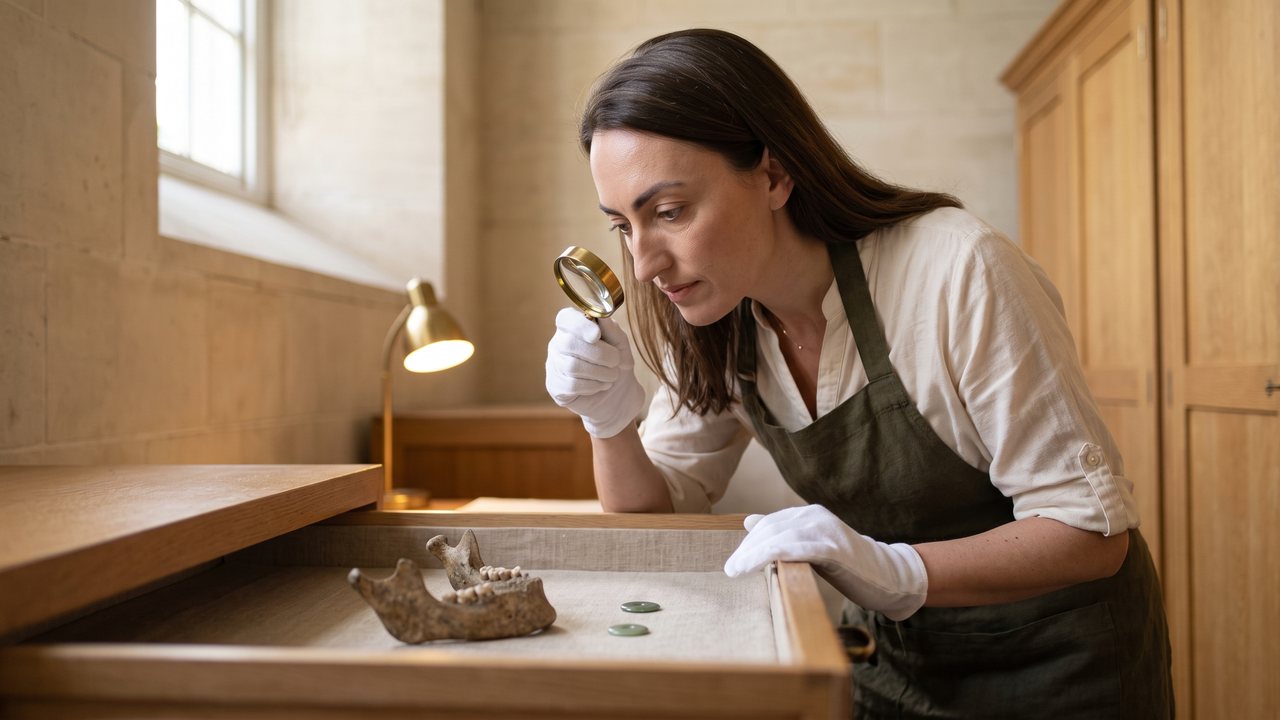
Somewhere in a museum drawer there is a human front tooth with a small green stone set into it. The stone has been there for more than a thousand years. It has outlasted the person, the city and the language they spoke. That is exactly why it is the wrong thing to look at. The stone is the survivor. The question is what it cost the tooth.
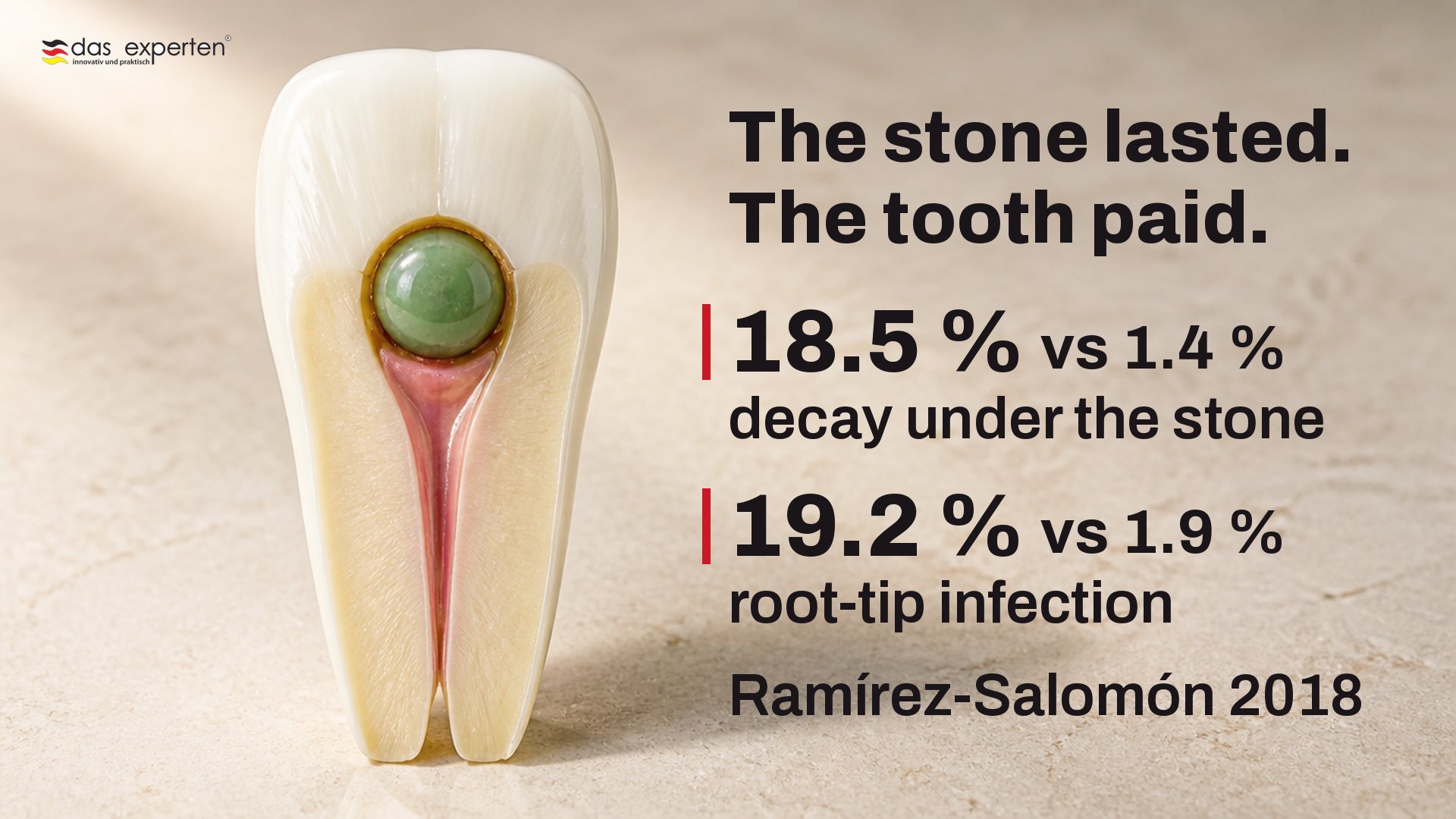
So, are tooth gems bad for your teeth? The short answer first: the gem itself rarely is. The damage lives at the border between the ornament and the enamel. The longest trial of that idea was not run in a clinic. It was run by the Maya, and when researchers in Yucatán compared 193 inlaid front teeth with 211 untreated ones from the same region and era, decay sat in 18.5 % of the jewelled teeth and 1.4 % of the plain ones.
The Maya ran the longest tooth-gem trial
Between roughly 1,800 and 500 years ago, across the Classic and Postclassic periods, Maya practitioners cut small round cavities into the enamel of front teeth with stone tools and set in discs of jadeite, obsidian or pyrite. Enamel is the hardest tissue the body makes, and they drilled it without a single modern instrument. Most of those inlays are still in place today. The cement held for longer than most buildings stand.
What was in that cement? In 2022 a team analysed eight samples of sealant and filling from three Classic Maya sites — Holmul in Guatemala, Baking Pot in Belize and the Copan Valley in Honduras. They found resins from pine-family trees, a probable essential oil from the mint family, a preparation from the daisy family and bitumen. The authors suggest the mix may have had antibacterial and anti-inflammatory properties. A glue that also fought the mouth.
You have probably seen those photographs: a skull, a row of teeth, a neat green dot in each. You admired the stone and the precision. Almost nobody looks at the tooth around it. That is the trap every survivor sets.
What happened under the stone
The 193 inlaid teeth came from 107 people. Against the untreated teeth, decay was about thirteen times more frequent: 18.5 % against 1.4 %. Infection at the tip of the root, the kind that ends in an abscess, was about ten times more frequent: 19.2 % against 1.9 %. Calcified pulp showed up in 59.8 % against 44.5 %. And the same authors conclude that, on average, the cement sealed excellently. Both statements are true at once, and that is the lesson.
A micro-CT study of six inlaid teeth about 1,600 years old, from Guatemala, showed where the difference came from. In the canines the cavity for the stone never reached the pulp. In the upper incisors it went straight through into the pulp chamber. Same drill, same craftsmen, different tooth. The risk was never in the jade. It was in how much tooth stood between the stone and the nerve.
Two more details from the Yucatán count are worth keeping. Internal resorption, where a tooth begins to dissolve its own root from the inside, appeared in 2.2 % of the inlaid teeth and in none of the untreated ones. And age at death made no significant difference to any of these rates: the older owners of jewelled teeth were not worse off than the younger ones. What decided the outcome was not how many years the stone was worn. It was which tooth it was set in.
Are tooth gems bad for your teeth today?
A modern gem is not drilled in. A review from the dental school in Bern describes the usual kind as a small ornament applied to the tooth surface with an adhesive. That removes the danger that hurt the Maya most — the open door into the pulp. It does not remove the one the same review names plainly: ornaments on teeth favour the accumulation of plaque. Every gem has an edge, and an edge is a ledge where the bristles skip and the film stays.
If you already wear one, you know the feeling: your tongue finds the stone a hundred times a day, and your toothbrush somehow never does. The gem is the part of the tooth you check most often in the mirror and clean least often at the sink.
The asymmetry is what the photographs hide. If you care for the border, the gem costs you a little attention twice a day. If you forget it, the cost is paid by enamel, which does not grow back, under a stone that will look perfect the whole time. Brush the rim of the gem itself, not only the face of the tooth. Angle the bristles into the seam. And let your dentist look at that tooth on every visit, because what happens under an ornament is exactly what you cannot see in a mirror.
What our own brush is made of
Our SENSITIV brush is built on DuPont Tynex® ultra-soft filaments, 48 % softer than standard nylon and round-ended. Softness does not make an edge safe; attention does. What a soft, round-ended tip lets you do is go back to the same seam every morning and every night without thinking twice about it.
The Maya stone outlived its owner by a thousand years. Your task is smaller: make sure the tooth under yours outlives the trend.