


Toothpaste Allergy: the Rash Around Your Lips Is More Often the Flavour Than the Fluoride; and a Cream Can Make It Worse
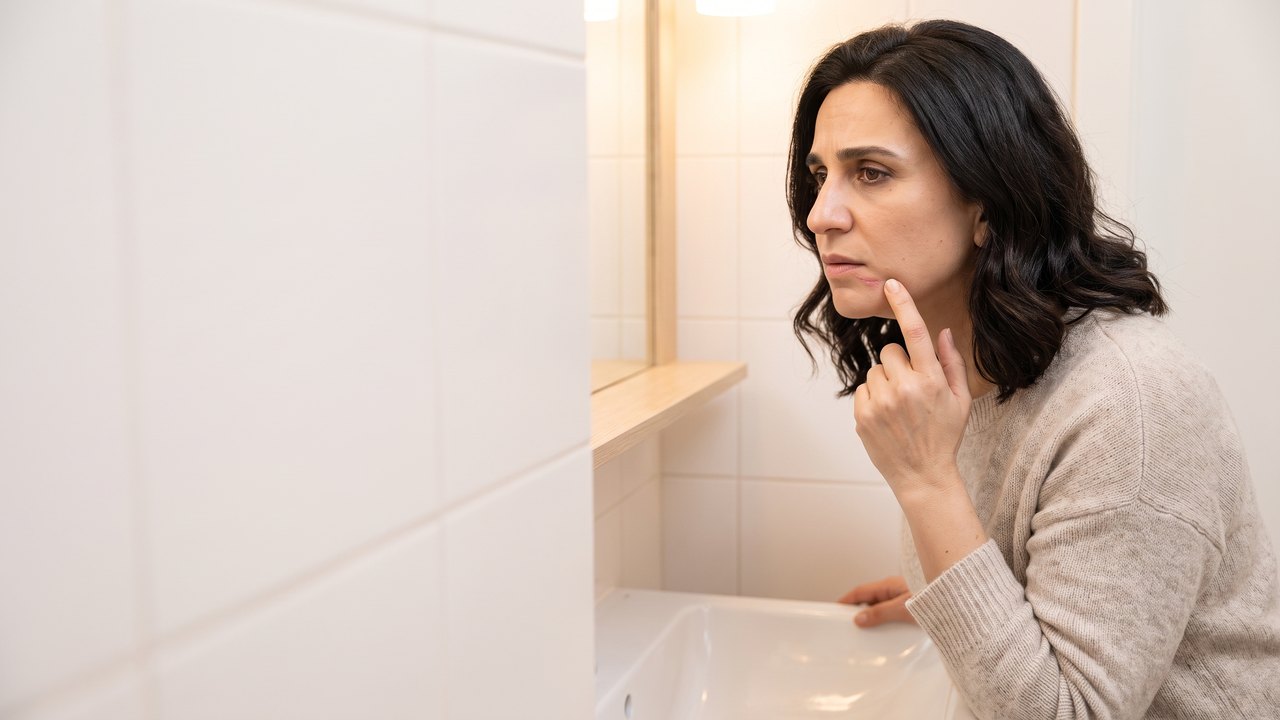
It starts as a dry patch at the corner of your mouth. You blame the wind, then the lip balm, then the new coffee cup. You buy a cream; it helps for a week, and the patch comes back wider. One of our own buyers described exactly this in a one star review this month: a rash after a new toothpaste. They asked the question almost nobody asks, can toothpaste do this? It can. A toothpaste allergy is real, and the usual culprit is not the ingredient people fear. The fix starts by taking something away, not by adding a cream.
We fear the famous ingredient and ignore the anonymous one. Fluoride has a name, a history and an army of opponents. The flavour is a single word on the label, aroma, and nobody reads it. Turn any tube over: the list is long, and most people stop reading at the first line. Yet the skin of your lips meets that one word twice a day, for two minutes, in foam.
Toothpaste allergy: why it shows on the lips, not in the mouth
The inside of the mouth is rinsed by saliva and tolerates a great deal. The border of the lips and the skin around them get the foam, and the foam dries there. Contact allergy is also slow: the reaction appears a day or two after contact, so nobody connects it with the brush. What you see is dry, scaly, cracked lips, doctors call it cheilitis, or small red bumps around the mouth.
In 2000 a network of Italian contact dermatitis clinics, GIRDCA, examined 54 patients with eczema of the lips in whom toothpaste was a suspect. They patch tested them with a standard series, with a special series of toothpaste ingredients and with the patients' own pastes. Then they ran the simplest test there is: stop the paste, then restart it. Toothpaste was confirmed as the cause in 15 of 54. The most frequent culprits were flavourings, with spearmint oil at the top. In the stop restart test the rash came back in 10 of 12 people when the same paste came back.

In 2023 a team in Malmö gave people already allergic to carvone, the molecule that makes spearmint taste of spearmint, a month of toothpaste flavoured with it, twice a day. Of the ten allergic users, seven saw lesions inside the mouth flare and two developed eczema around the mouth; people on an unflavoured paste scored significantly better. And a case from Sydney reads like a parable: a 63 year old woman lived with cracked lips for six years. The cause was anethole, an anise tasting flavour in her spearmint paste. She changed the paste, and the lips healed.
Perioral dermatitis and toothpaste: the cream that feeds the rash
A second condition looks similar and behaves differently. Perioral dermatitis is a rash of small red bumps around the mouth that typically spares a thin clear line of skin right at the edge of the lips. Its best documented trigger is not toothpaste at all. It is a steroid cream, often the very one applied to calm the rash. The cream quiets it, the rash returns when the cream stops, and it returns worse. Reviews of the treatment evidence agree that most mild cases settle with what dermatologists call zero therapy: stopping the cosmetics and steroid creams on that skin. Fluoride toothpaste has been blamed too, a letter in 1976, one case with a high fluoride paste in 2013, but these are single cases, not proof. Do not throw away fluoride on a hunch; if your dentist prescribed it, it is there for a reason.
Toothpaste allergy symptoms: the free test before the expensive one
Now read the asymmetry. Adding a new cream to a rash you do not understand can make it worse. Taking a suspect away costs nothing. So start by subtraction. For a few weeks switch to a paste with a different flavour, or none, and stop any cream you started on your own. If the skin calms down and the rash returns when the old tube returns, you have done in your bathroom what the Italian clinics did in theirs. Then see a dermatologist and bring the tube: patch testing with your own products is how the cause gets its name. How often is it truly an allergy? That depends on who is counted. At the Mayo Clinic 45 % of 91 patients patch tested for stubborn cheilitis had allergic contact cheilitis; in a Sydney series it was 17 % of 91. Toothpaste is one suspect among lip balm, lipstick, sunscreen and metal, not the only one.
No paste is safe for every pair of lips, and ours are no exception. Our INNOWEISS lists eight ingredients on its product record: no flavouring, no SLS, no fluoride, but it does carry two plant enzymes, papain and bromelain, and enzymes are proteins. If a rash came with it, do what this article tells you to do with any tube: stop it, watch the skin, and show the label to a doctor.
Tonight, before you reach for the cream, turn your toothpaste over and find the word aroma.
The suspect is rarely the ingredient everyone argues about. It is the one word line on the label you have never read.