





Did postbiotic toothpaste perform better in this lab test?
A laboratory comparison of five children's toothpastes did not show a statistically significant advantage for the postbiotic formula. Researchers tested 48 specimens from extracted teeth, rather than treating children. The findings do not prove all formulas are equal, and they cannot identify the effect of postbiotics alone because the ingredients differed.
Brief coverage: 2026-08-28–2026-09-04 · Source review: 2026-10-02
The experiment involved specimens, not children
Researchers tested five commercially available children's toothpastes and a negative control. The products contained different combinations of fluoride, hydroxyapatite, ozone, propolis and postbiotics. Postbiotics are preparations involving non-living microorganisms or their components. The experiment compared finished formulas, not an identical toothpaste with and without just that ingredient.
The team divided 48 specimens from extracted molars into six groups of eight. After four days of mineral loss in an acidic solution, a 14-day cycle alternated conditions that remove and restore minerals, with toothpaste applied twice daily. The researchers measured surface hardness. Remineralization means minerals returning to tooth tissue; it is not a synonym for repairing a cavity in a patient.
A promising idea still needs a fair comparison
All five toothpaste groups showed improved laboratory surface hardness. The comparisons between toothpaste groups did not show statistically significant differences. A numerical ranking therefore cannot establish that a postbiotic toothpaste was better. This result also does not prove equal effectiveness; a study can fail to detect a difference without establishing equivalence.
Six equal groups are not six proven winners
Picture a figure with six boxes, each holding eight specimen symbols. That is a useful way to show how the experiment was organized. The equal boxes describe allocation, however, rather than effectiveness. Turning them into six success percentages would invent an outcome the design alone cannot provide.
You may have seen a headline that jumps from 'tested in a laboratory' to 'works for your teeth.' Read the bridge between those statements carefully. What was measured? What was the comparison? Did the result show improvement within a group, or superiority over another group? Those are separate questions. An experiment can help researchers choose the next question without settling the last one.
The missing step is evidence in people
A specimen experiment cannot measure whether a child finds a treatment acceptable, uses it as intended, or experiences a lasting benefit. Those are questions for appropriately designed studies in people. Calling a laboratory result a cure skips that step. Keeping the distinction visible gives a promising idea room to develop without asking you to believe more than the experiment shows.
The next time a tooth-repair headline catches your eye, look for the words 'laboratory' or 'clinical trial' before deciding how much weight to give it. For this paper, the careful conclusion is that an experimental approach was investigated, while superior clinical benefit remains unproven.
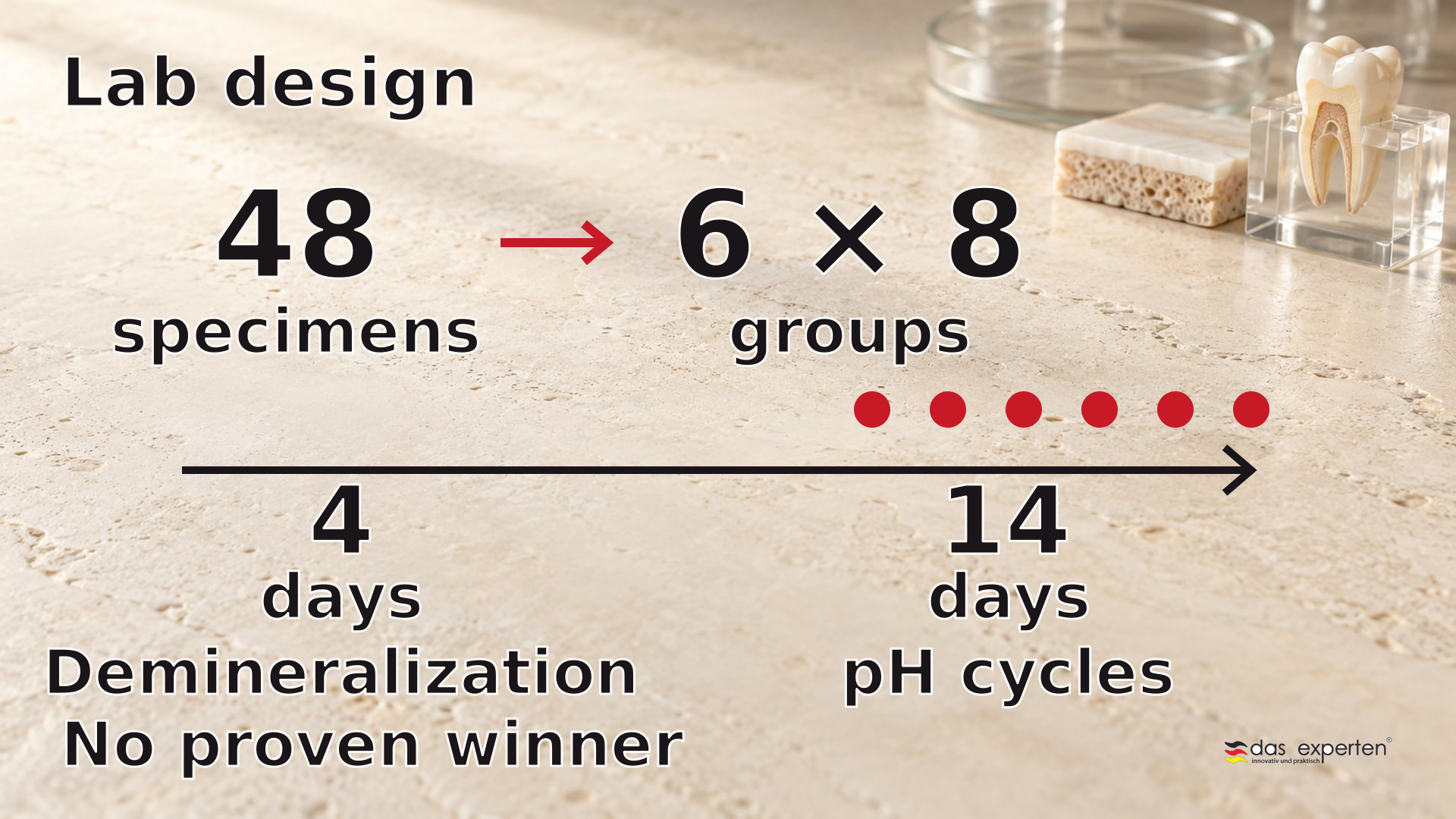
| specimens | 48 |
|---|---|
| groups | 6 × 8 |
| Demineralization | 4 days |
| pH cycles | 14 days |
Questions about this study
Was this a trial involving children?
No. It was a laboratory experiment with 48 tooth specimens in six groups, using a 14-day experimental cycle.
Does no significant difference mean all treatments are equally effective?
No. Failure to detect a significant difference is not proof of equal effectiveness. This experiment did not establish superiority between the groups.