





Why a child's saliva and plaque tell different stories
In ten mother–child pairs, researchers found more age-related changes in small chemicals in plaque than in saliva between ages one and two. The counts describe chemicals, not disease or bacteria. This small exploratory study shows why the kind of mouth sample matters; it cannot predict an individual child's future dental health.

Brief coverage: 2026-08-28–2026-09-04 · Source review: 2026-10-02
Ten families offered two views of change
Researchers followed ten mother–infant pairs, taking oral samples when the children were one and two years old. They studied small chemicals called metabolites in saliva and plaque. A metabolite can reflect biological activity, food, or other inputs. Plaque is the microbial film on teeth. The team also examined bacteria and viruses in the children's saliva.
Plaque showed more changed chemicals than saliva
Between ages one and two, five saliva metabolites met the study's criteria for change: one increased and four decreased. In plaque, 31 met those criteria: 23 increased and eight decreased. These numbers count chemicals, not children, bacteria, or cavities. They do not describe the size of each chemical's change.
More change does not mean more disease
The authors describe the study as exploratory. With ten pairs, it cannot establish a pattern for every child. Diet, tooth eruption, oral hygiene, and other possible influences were not fully accounted for. The research also cannot establish which microbes passed from mother to child. The observations provide questions for larger studies, not a prediction of a particular child's dental future.
Read the count before judging the direction
Imagine two rows in a figure: saliva with five marked dots, plaque with 31. It is tempting to call the longer row a worse result. But a count of changed chemicals is not a health score. Even arrows pointing up and down need careful labels: 'increased' and 'decreased' do not automatically mean 'good' and 'bad.'
This is why the sample matters. A measurement has a location, a time, and a specific meaning. Ask all three questions before turning a chart into an explanation of health. You do not need to remember chemical names to follow that logic. You need to know what the dots represent and what the researchers were comparing.
A developing mouth is a research subject with many moving parts. This paper offers a closer look at some of them, while leaving the causes and long-term outcomes open. When you read the figure, treat it as a map of measured changes rather than a report card for a child.
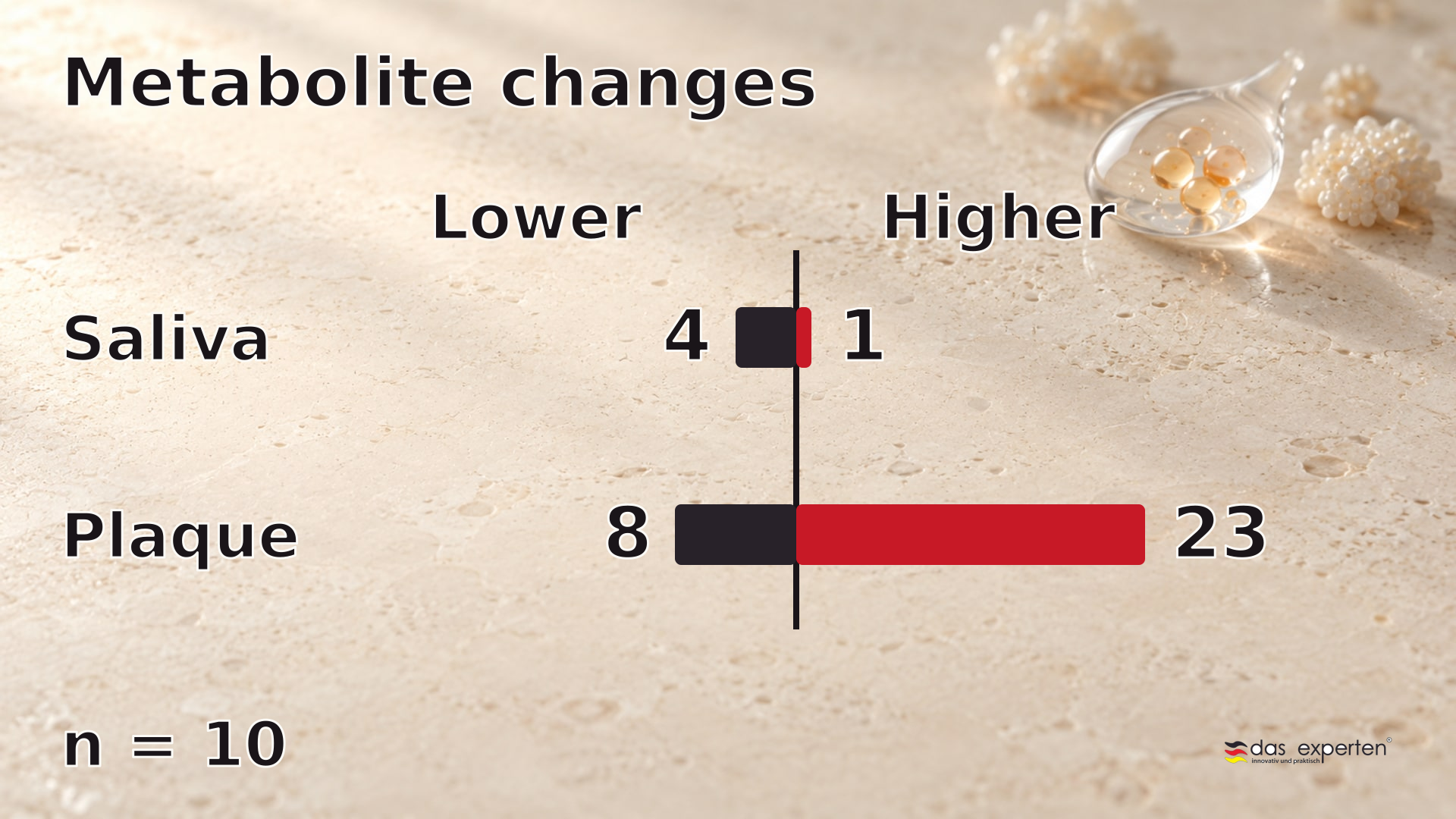
| Saliva | Lower: 4 | Higher: 1 |
|---|---|---|
| Plaque | Lower: 8 | Higher: 23 |
Questions about this study
Do 31 changed plaque metabolites mean 31 harmful bacteria?
No. Metabolites are chemicals, not bacteria. Their number does not measure disease or count children with a problem.
Does this study predict whether a child will develop cavities?
No. It is an exploratory study of ten mother–infant pairs, and the measured changes do not establish an individual cavity prediction.