





What a sulfur signal below the gums can tell us
In a study of 92 adults, a sulfur compound measured below the gums was higher in groups with gum inflammation or periodontitis than in a healthy group with little plaque. The displayed measurements came from 79 participants. They show a relationship between group and measurement, rather than a test that diagnoses an individual from their breath.

Brief coverage: 2026-08-28–2026-09-04 · Source review: 2026-10-02
The same mouth contains several different places
Researchers compared 92 adults with healthy gums, gingivitis, or periodontitis. Gingivitis means gum inflammation; periodontitis involves damage to the tissues supporting teeth. They sampled saliva, tongue, plaque below the gums, plaque above the gums, and plaque between teeth. Plaque is the microbial film that forms on teeth. The team combined chemical measurements with information about bacteria and immune signals.
The larger signal was measured below the gums
Hydrogen sulfide, written H2S, is a sulfur compound that oral bacteria can produce. Measurements below the gums were available for 79 participants. Average concentrations were 7.49 µM in the healthy low-plaque group, 17.8 µM with gingivitis, and 37.5 µM with periodontitis. The unit µM describes concentration: how much of a substance is present in a volume of fluid. These are group averages for a specific sampling location, not readings of total breath odor.
A rising graph does not show a person getting worse
The study compared groups; it did not follow these people through a sequence from health to disease. Its sulfur findings show an association, not proof that this compound caused the damage. Neither an average nor a graph gives an individual diagnosis. The authors discuss possible future monitoring tools, but this research does not establish a home test.
Imagine seeing three dots farther to the right for groups with more serious gum disease. It is easy to read them as a timeline. Here, that would change the meaning: the dots describe different groups of people. A clear figure keeps the group labels, sampling location, and measurement unit visible. The healthy comparison had little plaque; its average does not represent every healthy mouth.
The place of measurement belongs in the headline
When you next read about a mouth chemical, look for where it was measured before judging what it means. A sample from one location cannot automatically stand for the whole mouth. Your useful takeaway is a reading habit: keep the measurement, the comparison, and the conclusion together.
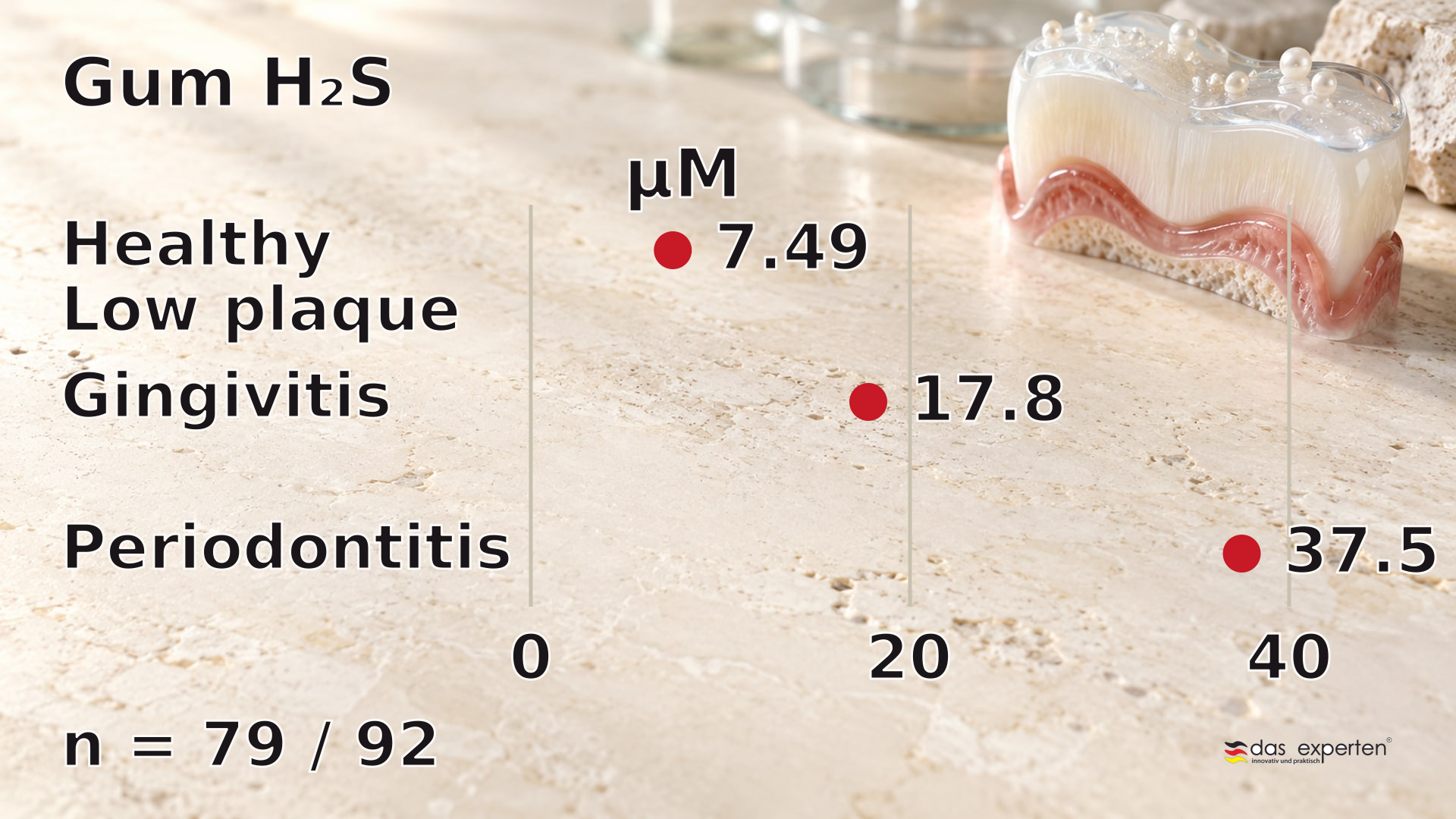
| Healthy / Low plaque | 7.49 µM |
|---|---|
| Gingivitis | 17.8 µM |
| Periodontitis | 37.5 µM |
Questions about this study
Does this study prove that bad breath diagnoses gum disease?
No. The displayed values concern hydrogen sulfide measured below the gums, not total breath odor. The study does not establish a home diagnostic test.
Did all 92 participants have the displayed sulfur measurement?
No. The study enrolled 92 adults, but the below-gum hydrogen sulfide data were available for 79.