





Are Premium Oral Care Products Worth Upgrading To?
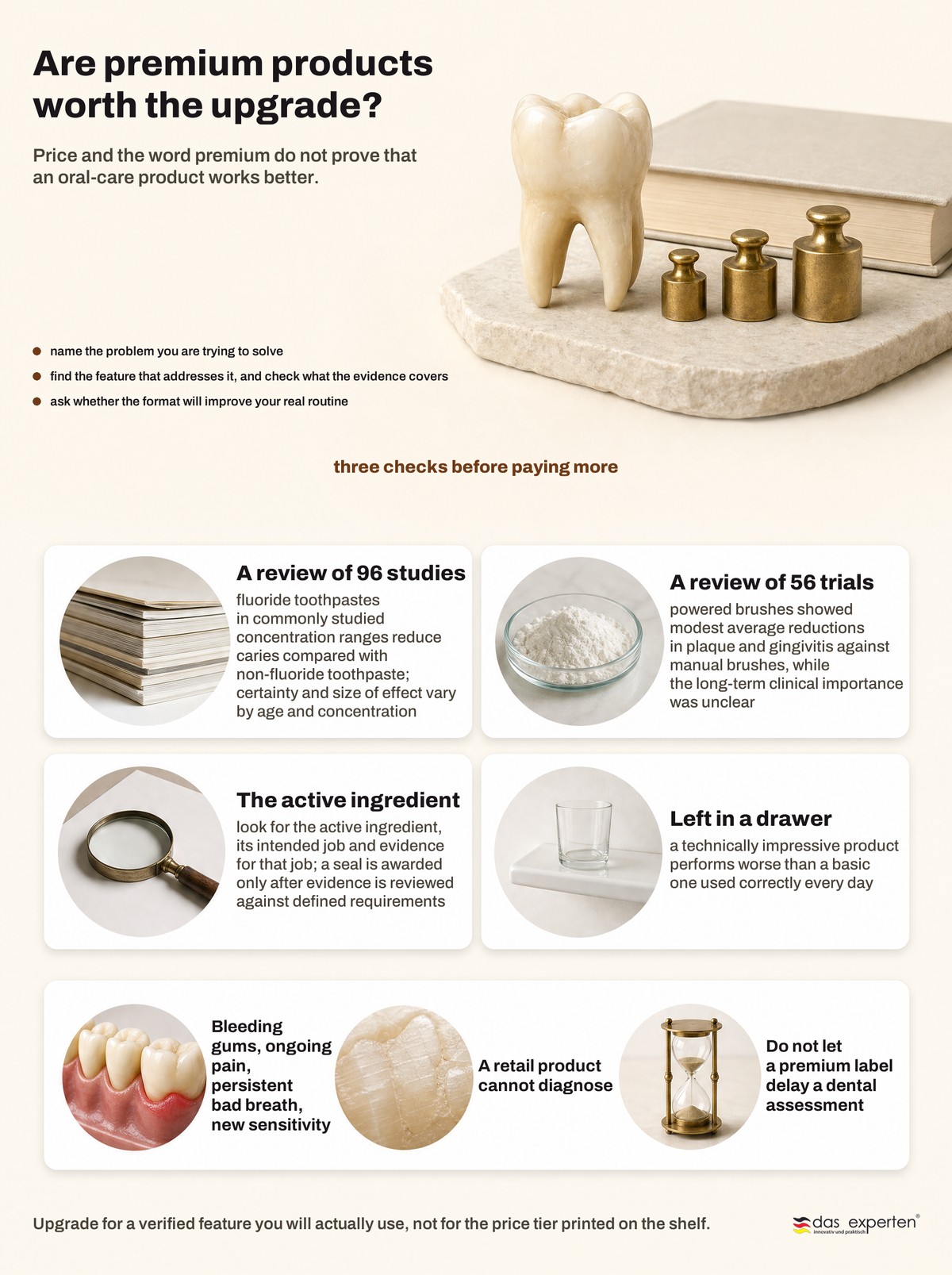
Sometimes, but price and the word “premium” do not prove that an oral care product works better. Upgrade when a specific, evidence supported feature matches a need you have and you will use it consistently.

The price tag is not clinical evidence
Packaging, flavor, materials and brand story can improve the experience of a routine. They do not establish better plaque control, cavity prevention or gum outcomes. For toothpaste, look for the active ingredient, its intended job and evidence for that job. The American Dental Association’s toothpaste guidance makes the same distinction: toothpastes may target cavities, sensitivity, gingivitis, tartar, erosion, whitening or bad breath, but a product earns the ADA Seal only after safety and efficacy evidence is reviewed against defined requirements.
A basic product can already cover the most important job
For cavity prevention, the evidence is attached to fluoride concentration and regular use, not to luxury positioning. A Cochrane review of 96 studies found that fluoride toothpastes in commonly studied concentration ranges reduce caries compared with non fluoride toothpaste; the certainty and size of effect vary by age and concentration. People who have been advised to use a fluoride free product need an individual plan with their dentist rather than a marketing promise that one ingredient automatically replaces another.
An upgrade earns its price when the mechanism matches your need
A powered toothbrush is a useful example. It is not better merely because it costs more. A Cochrane review of 56 trials found modest average reductions in plaque and gingivitis with powered brushes compared with manual brushes, while also stating that the long term clinical importance was unclear. For someone who struggles with technique, dexterity or consistent coverage, that mechanism may justify the upgrade. For someone who already brushes thoroughly with a suitable manual brush, the price difference may buy convenience rather than a meaningful health advantage.
Use three checks before paying more
First, name the problem you are trying to solve: sensitivity, cavity risk, plaque control, staining, dry mouth or another defined need. Second, find the product feature that addresses that problem and check whether the evidence concerns the finished product, the active ingredient, or only a laboratory mechanism. Third, ask whether the format will improve your real routine. A technically impressive product left in a drawer performs worse than a basic one used correctly every day.
Claims deserve more scrutiny when symptoms persist
Bleeding gums, ongoing pain, persistent bad breath and new sensitivity can have causes that a retail product cannot diagnose. Do not use a premium label as a substitute for a dental assessment. Product choice can support a routine, but it should not delay professional care when a symptom continues or worsens.
Upgrade for a verified feature you will actually use, not for the price tier printed on the shelf.