





Urolithin A and the Gut Barrier: The Inflammation Paradox
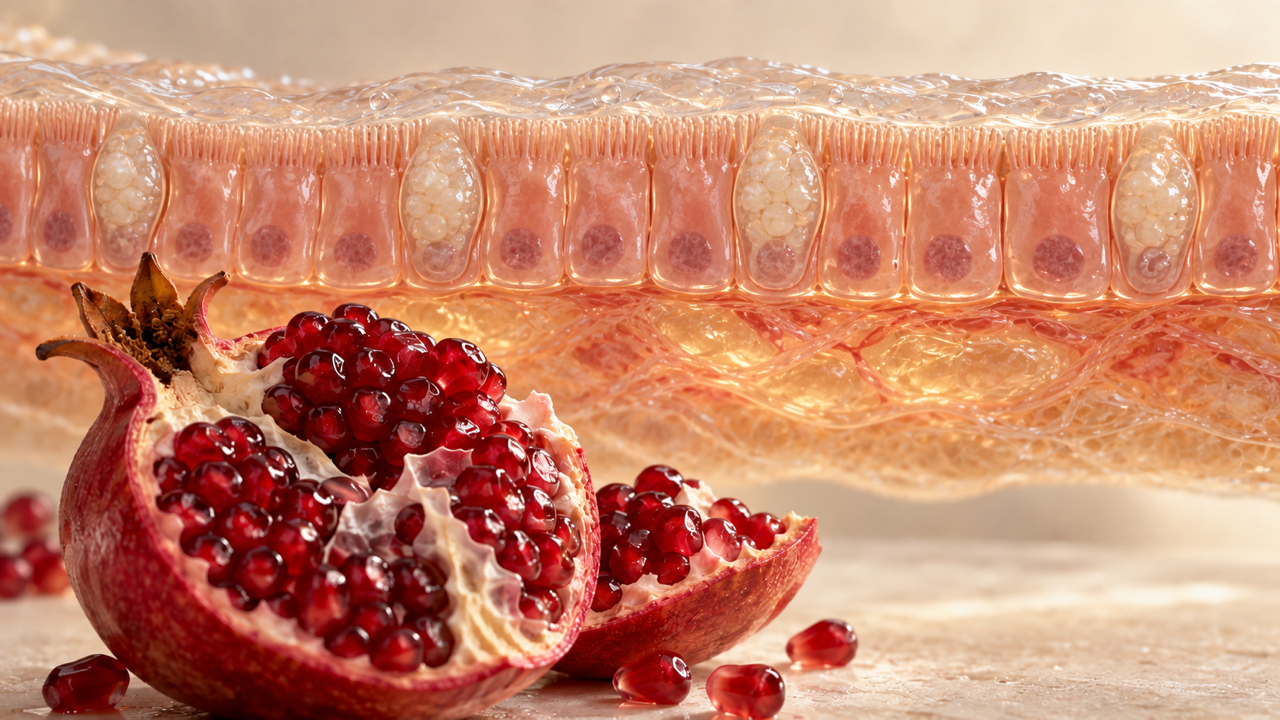
Inflammation is usually described as a fire to extinguish. Yet the intestine depends on carefully measured inflammatory signals to repair itself. A 2026 Nature Communications study maps one such paradox: urolithin A activated a cellular relay that strengthened markers of the gut barrier in mice, organoids and human intestinal tissue studied outside the body. The finding is important because it explains a mechanism; it is not a clinical cure claim.
The useful side of inflammation is the part we rarely hear about
The gut barrier is not a brick wall. It is a one-cell-thick living border covered by mucus and supported by immune cells. Too little defense leaves it exposed; too much inflammation damages it. The study suggests that the same immune machinery can protect the lining when the timing, place and dose of the signal are controlled.
You do not eat urolithin A—your microbes make it
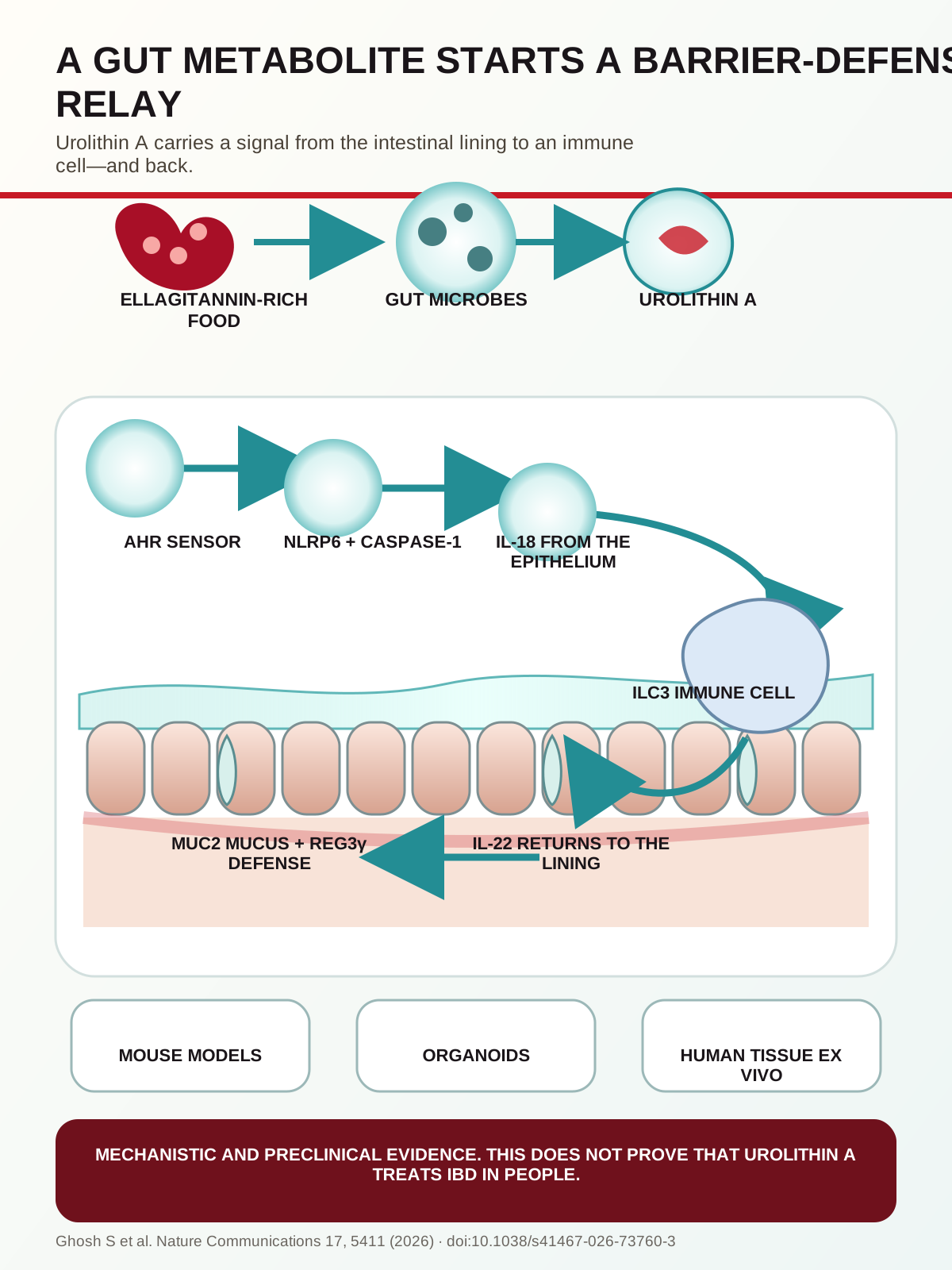
Urolithin A is not simply sitting inside a pomegranate. Gut microbes can make it from ellagic acid and ellagitannins found in foods such as pomegranates, berries and walnuts, and people differ in how efficiently they perform that conversion. That distinction matters: the paper tested a microbial metabolite, not the health effect of eating a particular fruit and not a supplement regimen.
One signal crosses two cell types, then returns to the barrier
Inside intestinal epithelial cells, urolithin A activated the sensor AHR. AHR then engaged NLRP6 and caspase‑1, leading the epithelial cell to release a homeostatic amount of IL‑18. That signal prompted ILC3 immune cells to produce IL‑22, which returned to the lining and increased MUC2 mucus and REG3γ antimicrobial defense. In plain language, one cell sounded the alarm, a second cell answered, and the answer helped reinforce the border.
The researchers did more than watch a correlation
The team tested the chain in chemically induced and infection-related mouse colitis models, in intestinal organoids and in co-cultures of epithelial and immune cells. When AHR was removed specifically from intestinal epithelial cells, or when NLRP6, IL‑18 or IL‑22 signaling was absent, key protective effects disappeared. Those loss-of-function experiments make the proposed relay more convincing than a simple before-and-after association.
The human result is promising—and still very small
The human experiment was ex vivo: cells isolated from intestinal biopsies from five people with inflammatory bowel disease were exposed to urolithin A in the laboratory. IL‑18 in epithelial cells and IL‑22 in ILC3 cells increased. That shows the pathway can respond in human tissue, but it does not tell us whether swallowing urolithin A improves symptoms, prevents flares or is safe and effective as an IBD treatment.
A mechanism worth following is not a treatment recommendation
The authors still do not know exactly how AHR activates NLRP6, which epithelial cell types matter most, or how urolithin A balances IL‑18 when that cytokine can help at one level and harm at another. The honest takeaway is therefore narrower—and more useful—than a miracle headline: microbial metabolites can act as precise instructions between the microbiome, the intestinal lining and immune cells. That biological conversation now deserves clinical testing, not self-treatment.
What this may mean for oral care
The intestine and the mouth are different ecosystems, and this study says nothing about urolithin A preventing gum disease. The relevant connection is the principle: microbial metabolites can tune signals between an epithelial barrier and immune cells. Oral-microbiome research asks a related question at the first gateway of digestion. For that mouth-focused context, read how oral probiotics aim to support the mouth microbiome.
Primary source: Nature Communications (2026), doi:10.1038/s41467-026-73760-3. ScienceDaily: secondary news summary.