





Agham · Oral microbiome imbalance
Oral microbiome imbalance: paano ibalik ang balanse
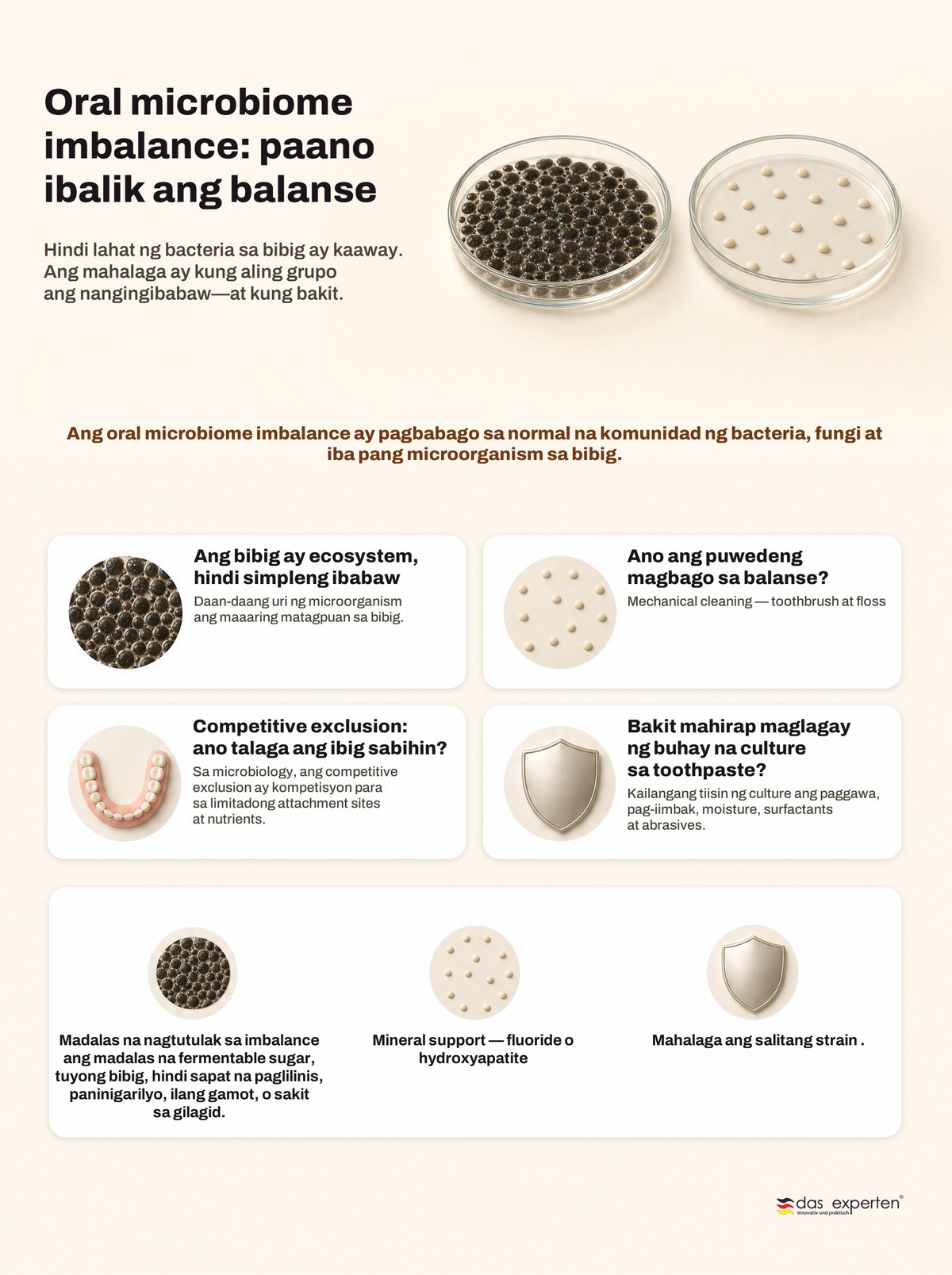
Hindi lahat ng bacteria sa bibig ay kaaway. Ang mahalaga ay kung aling grupo ang nangingibabaw—at kung bakit.
Ang bibig ay ecosystem, hindi simpleng ibabaw
Daan-daang uri ng microorganism ang maaaring matagpuan sa bibig. Nakatira sila sa enamel, dila, gilid ng gilagid at laway. Marami sa kanila ay normal na bahagi ng komunidad; nagiging problema kapag nagbago ang kapaligiran at may ilang grupo na dumami nang sobra.
Madalas na nagtutulak sa imbalance ang madalas na fermentable sugar, tuyong bibig, hindi sapat na paglilinis, paninigarilyo, ilang gamot, o sakit sa gilagid. Hindi iisang produkto ang sagot sa lahat ng dahilan.
Ano ang puwedeng magbago sa balanse?
| Paraan | Pangunahing tungkulin | Halimbawa |
|---|---|---|
| Mechanical cleaning | Nag-aalis ng plaque structure | Toothbrush at floss |
| Mineral support | Sumusuporta sa enamel laban sa acid challenge | Fluoride o hydroxyapatite |
| Antiseptic | Pansamantalang nagpapababa ng bacterial load | Chlorhexidine o CPC, ayon sa payo |
| Prebiotic | Binabago ang available na substrate | Xylitol o arginine |
| Probiotic | Naghahatid ng partikular na strain para sa microbial interaction | Viable o spore-forming culture |
Hindi magkakalaban ang mga paraang ito. Ang brush ay nag-aalis ng structure; ang fluoride ay tumutulong sa enamel; ang antiseptic ay may partikular na indikasyon; at ang probiotic approach ay nakatuon sa interaction sa microbial community. Ang tamang routine ay nakadepende sa caries risk, kondisyon ng gilagid at payo ng dentista.
Competitive exclusion: ano talaga ang ibig sabihin?
Sa microbiology, ang competitive exclusion ay kompetisyon para sa limitadong attachment sites at nutrients. Kapag may strain na nakakakapit at gumagamit ng parehong resources, maaaring mabawasan ang pagkakataon ng ibang microorganism na mangibabaw. Posibleng mekanismo ito—hindi garantiya na gagamutin ng toothpaste ang halitosis, caries o periodontitis.
Mahalaga ang salitang strain. Hindi sapat na nakasulat lamang ang “probiotic” sa kahon: kailangang matukoy ang organismo, mabuhay ito sa formula, at hindi ito kontrahin ng mismong sangkap ng paste.
Bakit mahirap maglagay ng buhay na culture sa toothpaste?
Kailangang tiisin ng culture ang paggawa, pag-iimbak, moisture, surfactants at abrasives. Maraming vegetative probiotic cells ang mas angkop sa lozenge o capsule. Ang spore-forming bacteria gaya ng Bacillus coagulans ay mas matatag habang dormant at maaaring ma-activate sa angkop na kondisyon.
Hindi ibig sabihin ng survival sa tube na awtomatikong may clinical benefit. Mahalaga pa rin ang dose, strain-specific evidence, consistency ng paggamit at kabuuang oral-hygiene routine.
SYMBIOS bilang konkretong halimbawa ng formula
Ang Das Experten SYMBIOS ay gumagamit ng Bacillus coagulans JYBC-016 sa spore form, na idinedeklara sa 4×10¹⁰ CFU bawat dose. Kasama rito ang xylitol at wala itong SLS o broad-spectrum antiseptic. Mga katotohanan ito tungkol sa formula; hindi ito product-specific na patunay na ginagamot ng paste ang anumang sakit.
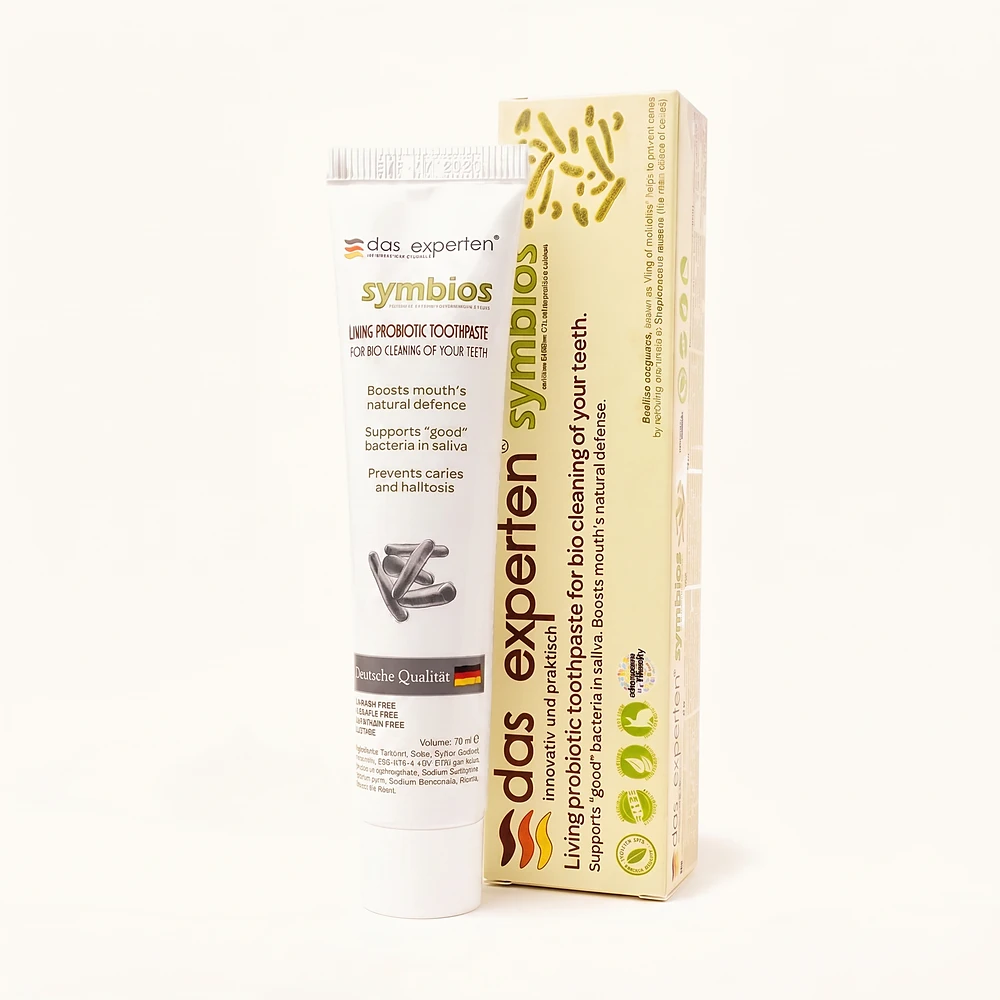
Spore-forming Bacillus coagulans JYBC-016, xylitol, SLS-free—isang malinaw na formula para ikumpara sa iba.
Tingnan ang formula at paggamitMga limitasyon na dapat malinaw
- Hindi pinapalitan ng probiotic toothpaste ang dalawang beses na pagsisipilyo at paglilinis sa pagitan ng ngipin.
- Hindi ito diagnosis o paggamot para sa caries, gingivitis o periodontitis.
- Magkaiba ang probiotic support at fluoride protection; huwag alisin ang fluoride kung mataas ang caries risk nang walang payo ng dentista.
- Ang epekto ay strain-specific. Hindi pare-pareho ang lahat ng produktong may salitang “probiotic.”
Mga madalas itanong
Ano ang oral microbiome imbalance?
Ito ay pagbabago sa balanse ng mga microorganism sa bibig. Maaaring dumami ang ilang bacteria na kaugnay ng acid, plaque, mabahong hininga o pamamaga habang nababawasan ang pagkakaiba-iba ng komunidad.
Paano gumagana ang probiotic toothpaste?
Naghahatid ito ng isang partikular na probiotic strain. Depende sa strain at formula, maaari itong makipagkompetensiya para sa puwesto at sustansiya sa biofilm. Hindi ibig sabihin nito na isterilisado o ginagamot nito ang bibig.
Buhay ba ang probiotic sa toothpaste?
Hindi lahat ng strain ay kayang manatiling viable sa paste. Ang spore-forming Bacillus coagulans ay mas matatag sa paggawa at pag-iimbak kaysa maraming vegetative probiotic cells.
Masama bang pumatay ng bacteria sa bibig?
May tamang gamit ang antiseptics kapag inirerekomenda ng dentista. Ngunit hindi lahat ng bacteria sa bibig ay nakasasama, kaya ang tuloy-tuloy na broad-spectrum antiseptic use ay hindi awtomatikong angkop sa lahat.
Kailangan ba ng fluoride ang probiotic toothpaste?
Magkaibang tungkulin ang probiotic support at fluoride. Ang fluoride ay may matibay na ebidensiya laban sa caries; kung mataas ang caries risk mo, itanong sa dentista kung anong fluoride routine ang tama para sa iyo.
Kailan dapat magpatingin sa dentista?
Magpatingin kung tuloy-tuloy ang pagdurugo ng gilagid, sakit, pamamaga, matinding sensitivity, mabahong hininga na hindi nawawala, o may hinalang caries o periodontitis.
Mga sanggunian
Monteagudo-Mera A. et al. Adhesion mechanisms mediated by probiotics and prebiotics and their potential impact on human health. 2019. doi:10.1007/s00253-019-09978-7
Aysha Jebin A., Suresh A. Oral microbial shift induced by probiotic Bacillus coagulans along with its clinical perspectives. 2023. doi:10.1016/j.jobcr.2023.03.013
Brookes Z.L.S. et al. Effects of chlorhexidine mouthwash on the oral microbiome. 2021. doi:10.1016/j.jdent.2021.103768